Weber DCOE carburettors have been the go-to choice for performance engines for decades. Whether you're running a set of 45 DCOEs on a straight six or 40s on a four-cylinder, getting the jetting right makes the difference between a car that runs well and one that runs properly.
This guide covers the fundamentals of Weber DCOE tuning on the dyno - the same process we use at The Torque Lab for every carburettor tune.
Understanding the Weber DCOE fuel circuits
A Weber DCOE has several fuel circuits that work together:
- Idle circuit - controls fuelling from idle to light throttle. Governed by the idle jet, idle holder, and mixture screw.
- Progression circuit - bridges the gap between idle and main circuit through progression holes in the throttle bore.
- Main circuit - provides fuelling at part to full throttle. Governed by the main jet and air corrector, with the emulsion tube controlling how fuel and air are mixed.
- Accelerator pump - provides a shot of fuel on sudden throttle opening to prevent a lean flat spot.
Starting point: main jet selection
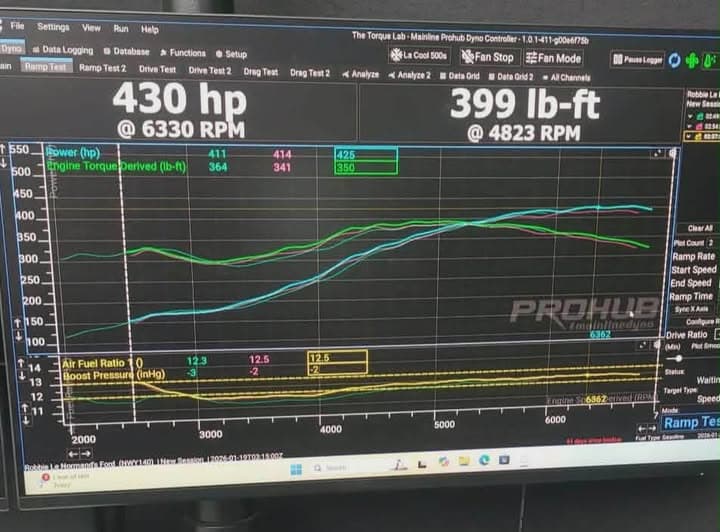
The main jet is the single most important component for full-load fuelling. On the dyno, we run the engine at wide-open throttle across the rev range while monitoring air/fuel ratio with a wideband O2 sensor.
Target air/fuel ratios for a naturally aspirated performance engine are typically:
- 12.5-13.0:1 at peak power RPM
- 12.8-13.2:1 through the mid-range
- Richer (12.0-12.5:1) at high RPM if exhaust gas temperatures are a concern
Main jets are changed in increments of 2-5 sizes until the target is achieved across the rev range. If the mixture is right at peak RPM but lean in the mid-range (or vice versa), the emulsion tube or air corrector needs attention.
Emulsion tubes and air correctors
The emulsion tube sits inside the main jet holder and has a pattern of holes along its length. These holes allow air from the air corrector to mix with fuel at different points, shaping the fuel curve through the rev range.
Different emulsion tube types (F2, F11, F16, etc.) produce different fuel curves. If the main jet gives the right mixture at peak RPM but the mid-range is off, changing the emulsion tube is often the answer.
The air corrector works in combination with the emulsion tube - a smaller air corrector richens the top end, a larger one leans it out.
Idle and progression tuning
Idle quality on a Weber DCOE depends on the idle jet size, idle holder (emulsion tube for the idle circuit), and mixture screw setting. The progression holes in the throttle bore need to be correctly positioned relative to the throttle plate - this is set by the idle speed screw position.
Signs of a progression problem include a flat spot or stumble when you first open the throttle from idle. This usually means the progression holes aren't uncovering at the right point, or the idle jet size isn't bridging properly to the main circuit.
Accelerator pump tuning
The accelerator pump provides an extra shot of fuel when the throttle is opened quickly. Without it, the sudden increase in airflow causes a momentary lean condition (flat spot) before the main circuit catches up.
Weber DCOEs allow adjustment of pump stroke, exhaust valve timing, and inlet valve size. On the dyno, we tune the pump shot by monitoring air/fuel ratio during rapid throttle openings. The goal is a clean, instant response with no flat spot and no excessive richness.
Why tune Webers on a dyno?
You can tune carburettors by spark plug colour and road testing, but a dyno with wideband O2 data removes the guesswork. You can see the exact air/fuel ratio at every RPM point, make a jet change, and immediately see the result.
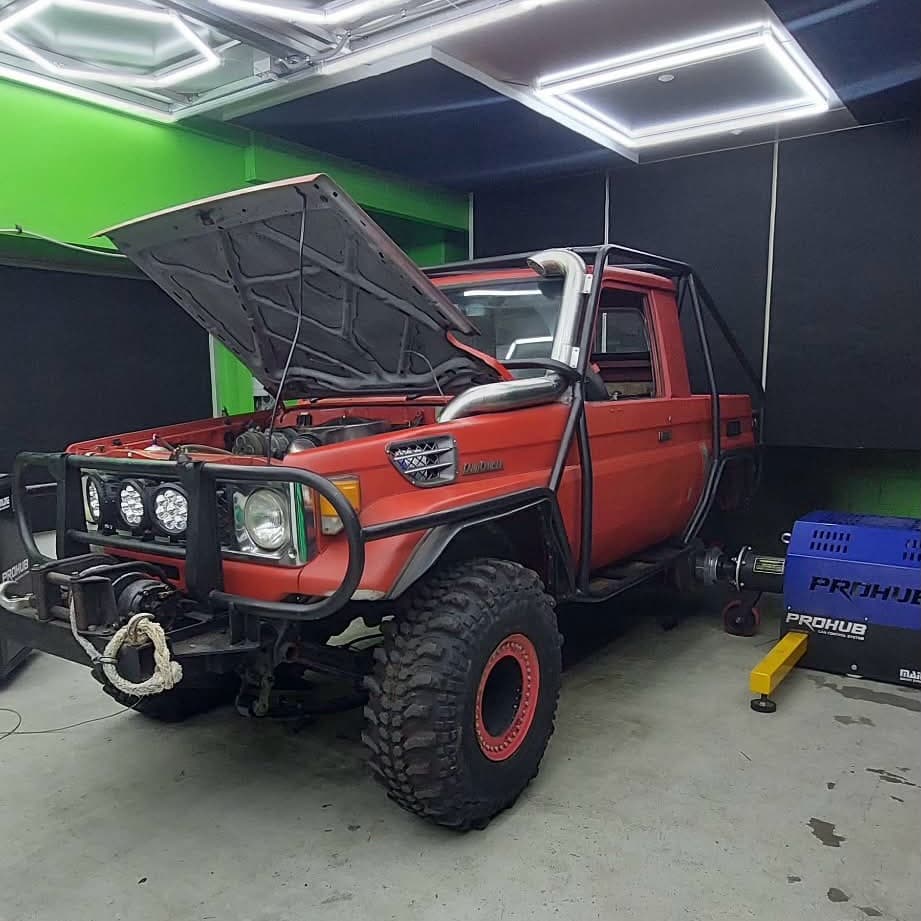
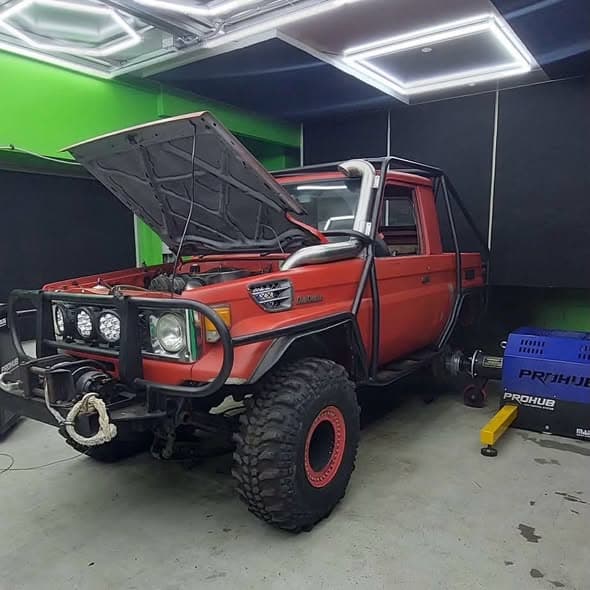
Our Mainline hub dyno is ideal for classic cars - it connects to the wheel hubs directly, so tyre size and condition don't affect the results.
If you've got a set of Webers that need sorting, bring them in. Whether it's a fresh install that needs setting up or an existing setup that's not quite right, we'll get it dialled in on the dyno.