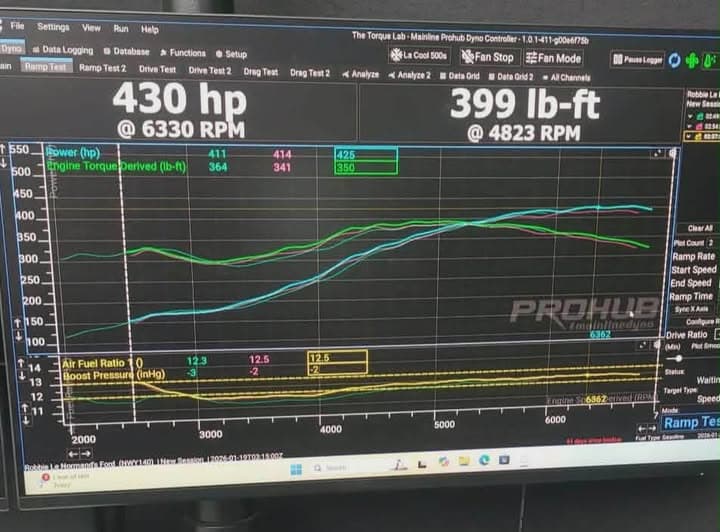
Dyno tuning is the process of calibrating your vehicle's engine management system on a dynamometer - a machine that measures power output under real-world load. Instead of guessing at what your engine needs, the tuner can see exactly what's happening in real time: air/fuel ratios, ignition timing, boost pressure, exhaust gas temperatures, and more.
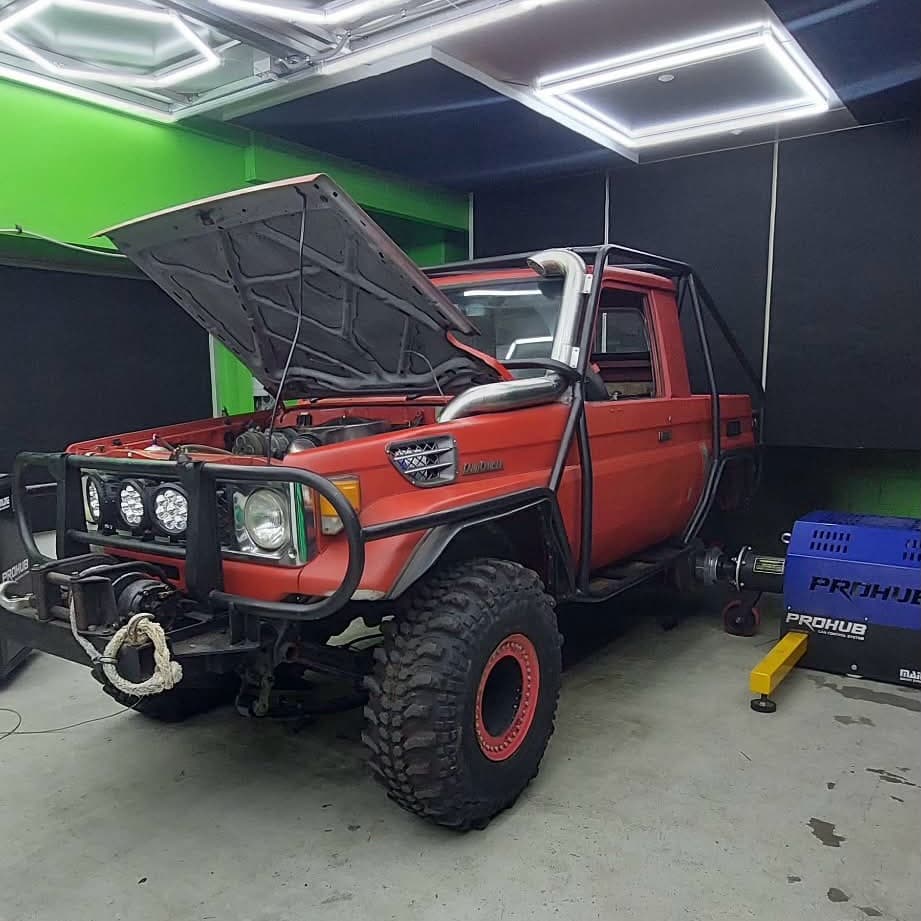
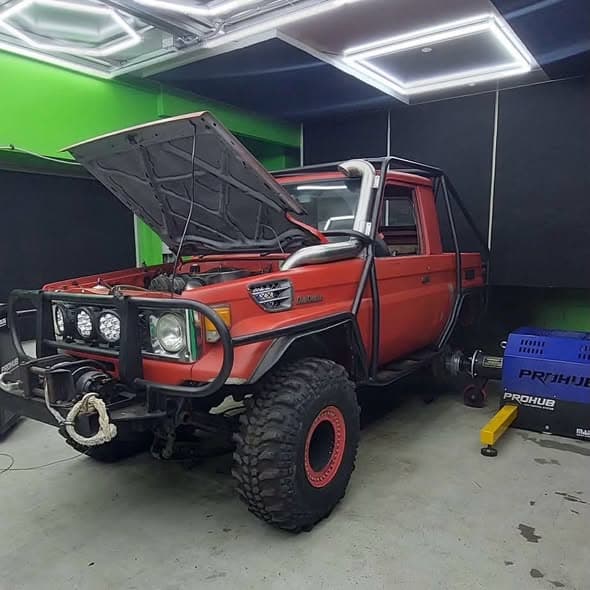
At The Torque Lab, we use a Mainline hub dyno - a chassis dynamometer that connects directly to the wheel hubs rather than using rollers. This eliminates tyre slip and heat build-up, giving far more accurate and repeatable results. It's the same technology used by vehicle manufacturers for factory testing.
How does dyno tuning work?
The process starts with a baseline run. Your vehicle is strapped onto the dyno and run through a series of power pulls while the tuner monitors live data on screen. This gives a clear picture of where the engine is at before any changes are made.
From there, the tuner adjusts the calibration - fuel maps, ignition timing, boost targets, and other parameters - then runs the vehicle again to measure the result. This process repeats until the tune is optimised for your specific engine, modifications, and goals.
Every tune at The Torque Lab includes before-and-after dyno sheets so you can see exactly what changed.
Dyno tuning vs file remap
A file remap (sometimes called a flash tune) involves uploading a pre-made calibration file to your ECU. These files are written for a generic version of your engine - they don't account for your specific modifications, engine wear, fuel quality, or altitude.
A custom dyno tune is built specifically for your vehicle. The tuner can see how your engine responds in real time and adjust accordingly. The result is a safer, more reliable tune that's optimised for your exact setup.
What vehicles can be dyno tuned?
Almost anything with an engine. At The Torque Lab we tune Japanese imports (Skylines, Silvias, Supras, RX-7s), classic Australian muscle (Commodores, Falcons), American V8s, European performance cars, diesel utes, 4WDs, and even carburated engines.
Our Mainline hub dyno is 4WD and AWD compatible, so we can properly tune vehicles that roller dynos can't handle safely.
What does a dyno tune cost?
A standard naturally aspirated dyno tune starts from around $500-$700 NZD. Turbo and forced induction vehicles are typically $800-$1,500+. Standalone ECU tunes (Haltech, Link) vary depending on complexity. Every quote includes before-and-after dyno sheets.
For a detailed breakdown, read our guide on dyno tuning costs in NZ.